Maisu Log '26: The Mifune Bird, May 11
 Wind Voyagers of Changbin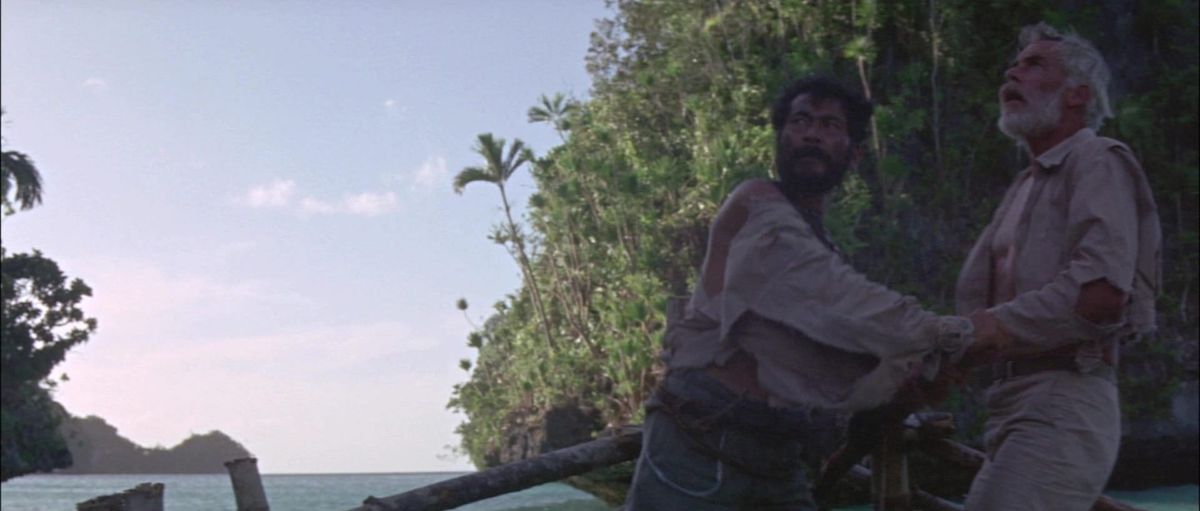
Original version in Chinese
✐ Isin (Guanyuu) ✐
On our very first day out from Taitung, the moment I spotted our first seabird, someone on deck shouted, “Mifune!”
It was a fairly large bird perched atop a massive piece of floating styrofoam debris. It had a pale beak, yellow feet, and a long, plump body—quite cute, really. Shoucheng from the WVOC had previously told me these were booby birds. Ah, so in Micronesia, they call it “mifune,” I thought. Yet the name sounded distinctly Japanese to me. Why was that?
I figured there must be some cultural backstory or local lore behind it, and that I would ask around when I got the chance.
Later on, I noticed a pattern: this bird was called mifune, and that bird over there was also called mifune. On board the Maisu, whenever a seabird swept past, someone was bound to yell, “Mifune!”
What on earth was a mifune? I really had to find an opportunity to ask.
“Mifune!” someone shouted again. These birds were truly remarkable creatures. Here we were, easily a week’s sail from the nearest landfall in any direction, yet there they were—these mifune birds. Where do they sleep at night? How do they rest when they get tired of flying?
During a relaxed moment perfect for chatting, I asked Kazu in all seriousness, “What kind of bird is a mifune?” Kazu is from Tokyo. She has been on numerous long-distance voyages aboard the Maisu—this trip being her eighth. Even before the Maisu, she had voyaged across the Caroline Islands alongside Captain Sesario’s father, Mau Piailug, the grand master navigator who sparked the revival of Polynesian wayfinding. With her rich Micronesian seafaring experience, having logged over 10,000 kilometers over the past 30 years, her word was the ultimate authority.
Kazu replied, “Hell in the Pacific.”
...Huh? What the “hell?”
Allen, overhearing us from nearby, leaned in to confirm, “Yeah, Hell in the Pacific.”
Was it a nature documentary? A wildlife series on seabirds? Using “hell” to introduce wildlife seemed like an unusually edgy creative choice.
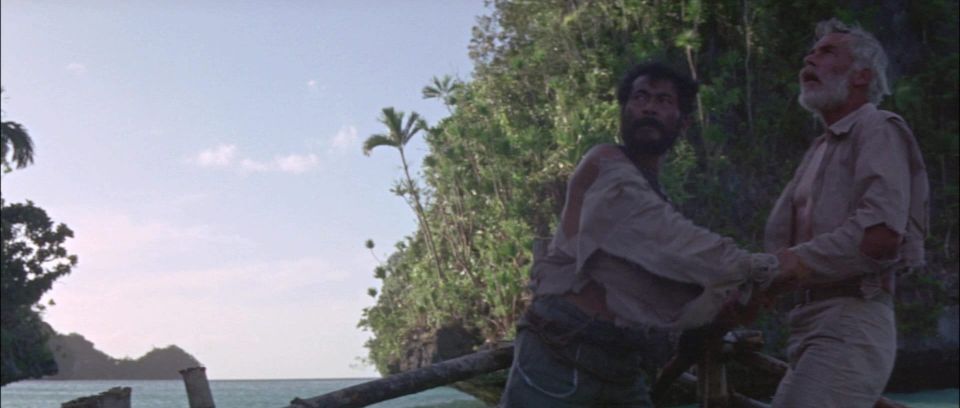
“It’s an old movie, probably from around 1970,” Kazu explained. “It features two men—a Japanese soldier and an American soldier. During World War II, through a twist of fate, they find themselves trapped on the same tiny island.”
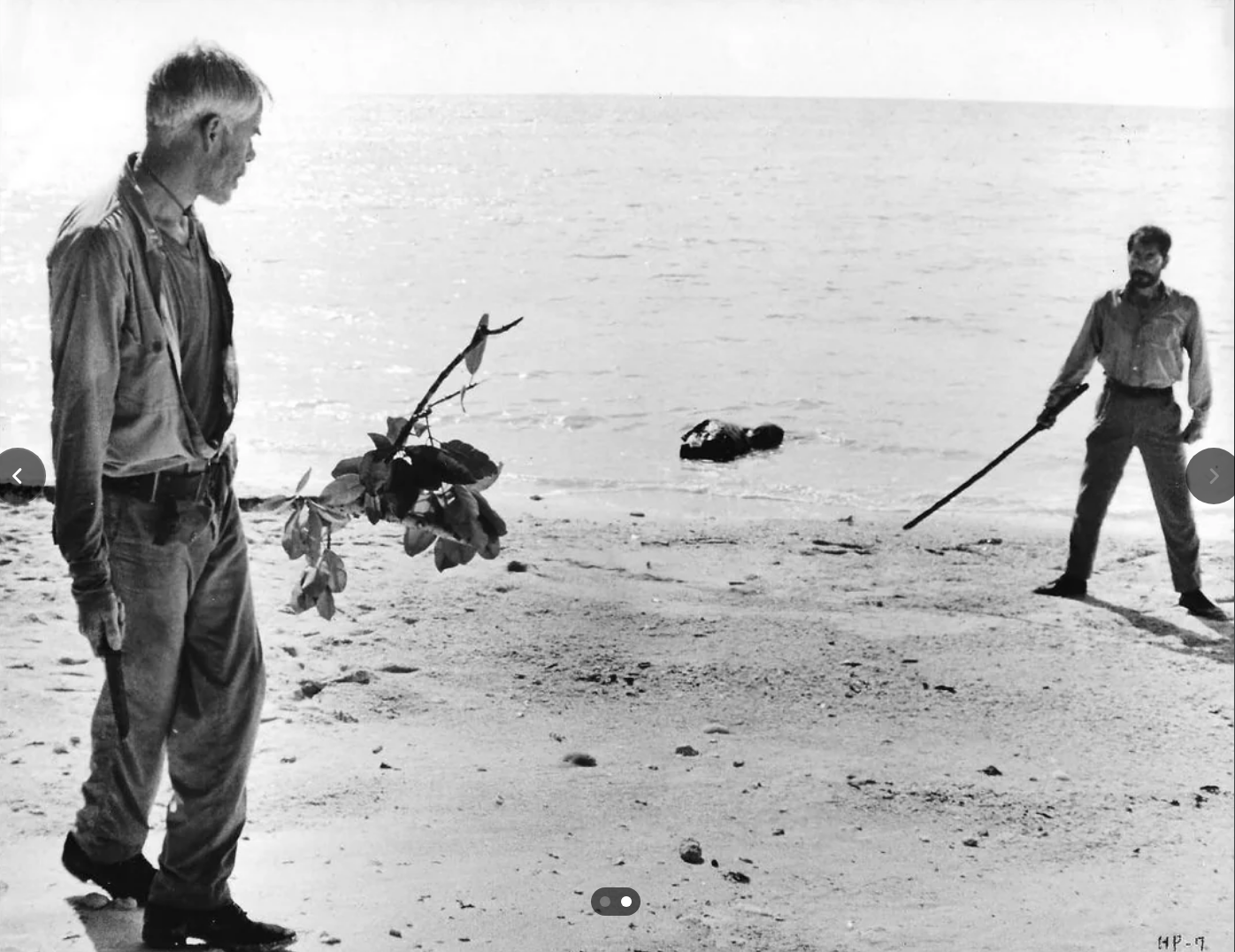
In the film, the two are constantly trying to kill each other, throwing the island into total chaos the moment their paths cross. Sesario had watched the film, and on one of his voyages, he used it to describe seabirds on the open ocean. Whenever different species of seabirds encounter one another at sea, they often start fighting. In fact, in the waters near Palau, I had witnessed a flock of notorious frigatebirds launching a coordinated attack on a group of booby birds much larger than themselves.
The actor who played the Japanese soldier in that film was the legendary Japanese icon MIFUNE Toshiro. “Mifune” was simply his family name.
Gradually, it became a running joke on the Maisu. Whenever the captain spotted a seabird, he would point and say, “Look, mifune!”
Eventually, the entire crew caught on, yelling “Mifune!” at the sight of any bird on the horizon.
“Don’t take it too seriously, Isin,” Kazu said with a gentle smile. “Ninety percent of the talk on the Maisu is just people fooling around. There’s no deep meaning to it.”
Post-edited by Yulun Huang (Yaya)