Maisu Log '26: Midnight Ramen, April 28
 Wind Voyagers of Changbin
Original version in Chinese
✐ Isin (Guanyuu) ✐
Midnight. I crawl out from my bunk into a pitch-black deck. A gentle voice drifts across from the galley box: “Isin, would you like some coffee or tea? Or perhaps a bowl of ramen?”
It has been nearly a week since we departed Okinawa. The North Star still hangs high in the night sky, sitting at roughly the same height as seen back home in Changbin, just slightly lower. Aboard a voyaging canoe propelled by the wind, the air is in perpetual motion. Out on the open ocean, the night air hangs heavy with saline mist; even without rain, a pervasive dampness settles over everything. The wooden gunwales of the Maisu are coated in a cold, sticky sheen. In these late-night hours, the canoe gets cold and clammy. In such moments, having a warm bowl of ramen feels like the ultimate comfort.
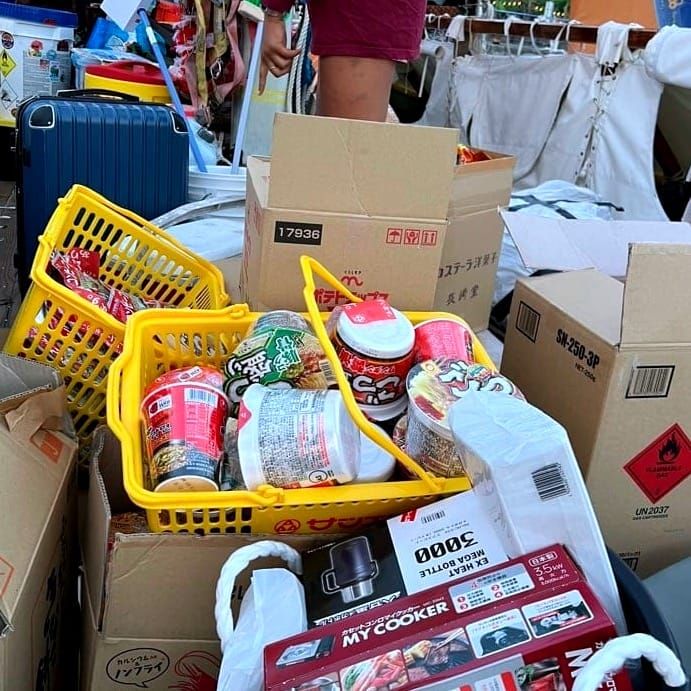
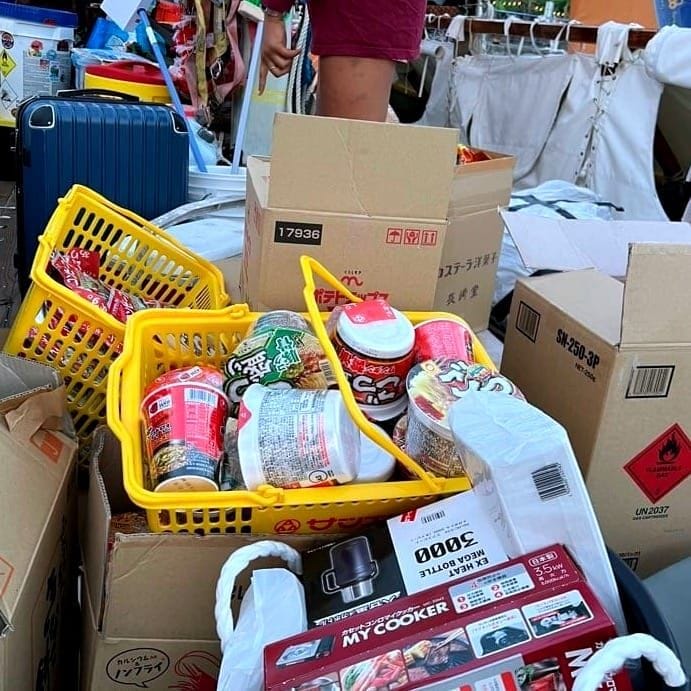
Yet this “ramen” is not what one might first imagine. In Micronesia, “ramen” simply refers to instant noodles. On the Maisu, after dinner wraps up and before the galley crew turns in for the night, they boil kettles of water and seal them inside large thermoses, ensuring hot water remains on tap through the night. It was originally meant for brewing coffee, but our hosts in Okinawa had generously supplied us with boxes of instant noodles as voyage provisions. Once underway, everyone started eating them as late-night snacks. Almost all of them were brands I had never seen before.
My personal favorite is the “Okinawa Soba.” It features dried bamboo shoots, an aromatic oil packet, and even a small slice of pork. The broth is light and refreshing; laced with a few drops of Okinawa’s beloved chili-infused rice wine, it warms the stomach completely. Yet apart from myself, most of the crew find little appeal in it, perhaps finding the broth as far too subtle. They don’t like the chili liquor either, finding the flavor odd—“Why would anyone put alcohol in noodles?” seems to be the general feelings, plus they find the little peppers far too spicy. To my palate, however, Okinawan flavors are remarkably close to Taiwanese tastes, and I love it. Even in Changbin, the local shops sell chili-infused rice wine; the only difference being that a bottle in Okinawa only has five or six little peppers floating inside, whereas a jar in Changbin is packed to the brim with chilies!
The crew’s two favorites on the Maisu are completely different. The first is “Sapporo Ichiban,” ubiquitous across the island nations of Micronesia. Its flavor is nostalgic, reminiscent of the classic “Prince Noodles” we grew up with in Taiwan. The other crowd favorite is Korea’s Shin Ramyun. While Sapporo Ichiban softens easily after steeping in hot water for a few minutes, Shin Ramyun really ought to be cooked on a stove. On the canoe, however, almost everything is made simply by pouring thermos water over the brick. By the late hours, the water has inevitably cooled below a boil, and given everyone’s eagerness to dig in, the noodles are often swallowed half-crunchy and barely softened. Out at sea, no one fusses over culinary perfection; as several crew members declare with a shrug, “I actually like my noodles crunchy.”
While some of the noodles come in disposable bowls, the vast majority are packaged in plastic packets. Due to the dining habits aboard the Maisu, our galley carries only flat plastic plates. So, whenever you want to make a bowl of “ramen,” you have to hunt around for any vessel that can hold broth. It is no easy task—at one point, even the rectangular plastic container meant for organizing chopsticks and spoons was repurposed into a noodle bowl.
Post-edited by Yulun Huang (Yaya)