Maisu Log '26: The Long Arrival at Okinawa, Apr 11
 Wind Voyagers of Changbin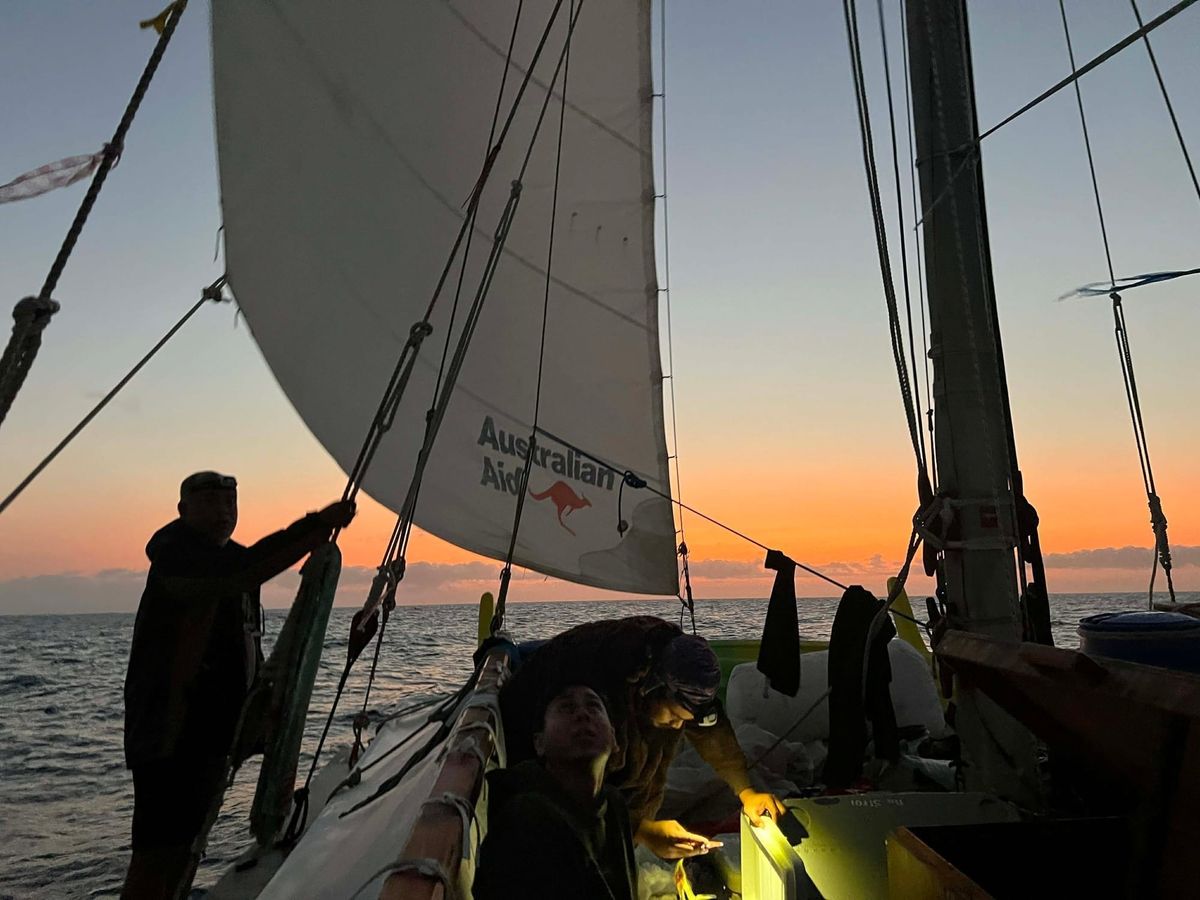
Original version in Chinese
✐ Isin (Guanyuu) ✐
To the south, thick fog clung to the space between the horizon and the mid-sky, an impenetrable wall that hid the stars. Higher up, toward the zenith, the clouds thinned just enough for Arcturus and Spica to flicker in and out of view, marking the approximate east.
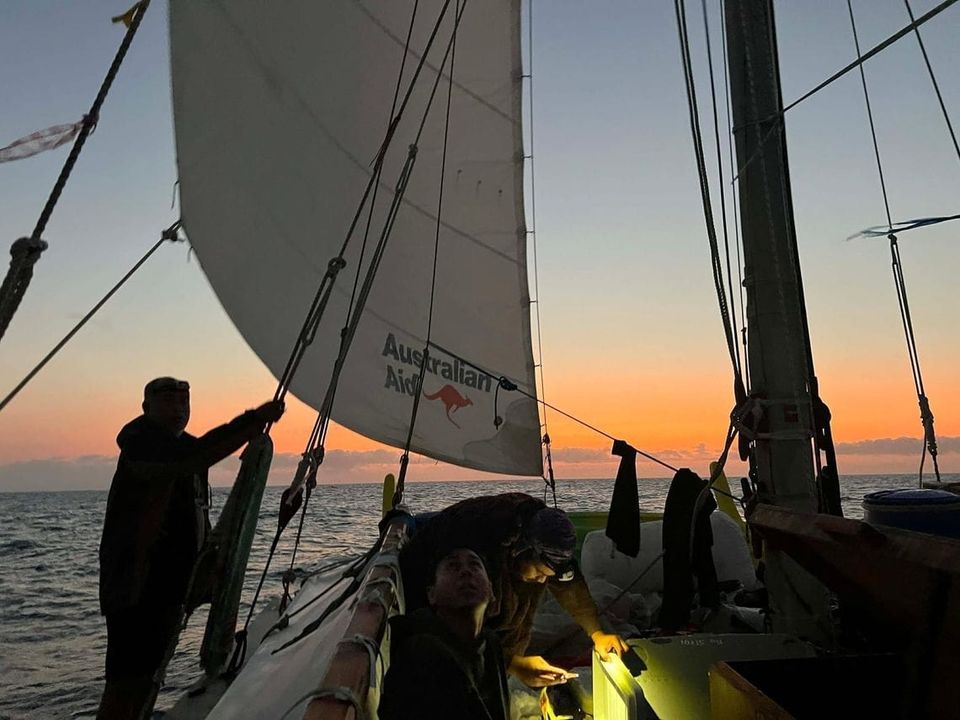
It was freezing; my muscles wouldn’t stop shivering. Looking to the other side of the canoe, the horizon was clear. Gemini hung low, hovering just ahead of the port side railing. Based on this, I reckoned we were heading toward tan Welo. I walked over and whispered to the steersman, asking for our heading. “Tan Welo,” came the steady confirmation. Looking toward the bow, sure enough—the North Star sat just to the left of the prow. The canoe was cloaked in almost total darkness, save for a faint red light illuminating the compass in front of the steersman.
Below the North Star, a subtle, luminous haze began to bleed into the horizon. “It’s the glow of Okinawa,” Edson told me, gripping a stay as he stood on the catwalk outside the gunwale. Edson and I shared the same watch: 12:00 to 6:00, both day and night. Waking up before midnight and crawling out of the warm, damp cabin, I always found the deck heavy with moisture. It wasn’t raining, but beads of water covered every inch of my rain jacket, inside and out—the kind of dampness where a piece of paper turns to pulp the moment it touches the air. It was bone-chillingly cold. Every midnight, I emerged trembling, my muscles shaking from the very core of my heart. Then, a gentle voice would drift from the galley: “Isin, would you like some hot coffee or water?” After a few sips, the warmth would take hold, and I’d try to ignore the sticky salt residue on my skin as I began to scan the sea. Edson gazed at that northern glow and said happily, “Okinawa!”
We were likely still 80km out. We peered intensely at the water, searching for lights—some from passing ships, others markers I didn’t yet recognize. Naturally, we also kept our eyes on the stars to verify our course. The steersmen had the hardest job, a role usually filled by the most experienced young men from Satawal. Despite their exhaustion, they never forgot to check on me: “Isin, you okay? Go get something to eat.” A voice from the galley would follow: “You want some ramen (instant noodle)?” Space on the canoe was cramped and living conditions were a world away from the comforts of land, but the way everyone looked out for one another surpassed anything I have ever experienced ashore.
The south wind had died down to a faint breeze drifting from the west. The captain ordered the outboard engine to assist, stabilizing our speed at about 4 to 5 knots.
Around 4:00 AM, while it was still dark, we passed the lighthouse at the southern tip of Okinawa, its white light pulsing rhythmically. As we reached the southeast waters, we consulted the charts; our plan was to enter Nakagusuku Bay toward Yonabaru, but the entrance was a narrow channel. In the dark, there was no sign of an inlet. We slowed our pace and hugged the coast, waiting for daybreak to reveal the way. According to the plan, an Okinawan escort boat would meet us near the channel.
By 6:30 AM, the sun had fully risen and the city’s glow vanished. The mountains of Okinawa were shrouded in haze, reduced to faint silhouettes. Around 9:00 AM, we finally located Kudaka Island at the channel entrance. The passage is only about 800 meters wide, and we had to be extremely careful; it is flanked by continuous shallow reefs where open ocean swells suddenly transform into massive breaking waves. You cannot get close. With the south wind leaning west, we stayed on the western side of the channel—the windward side—and slowly eased into the Kudaka passage.
As we cleared the channel into the great bay, the horizon opened up. In the distance, a boat was heading toward us at high speed.
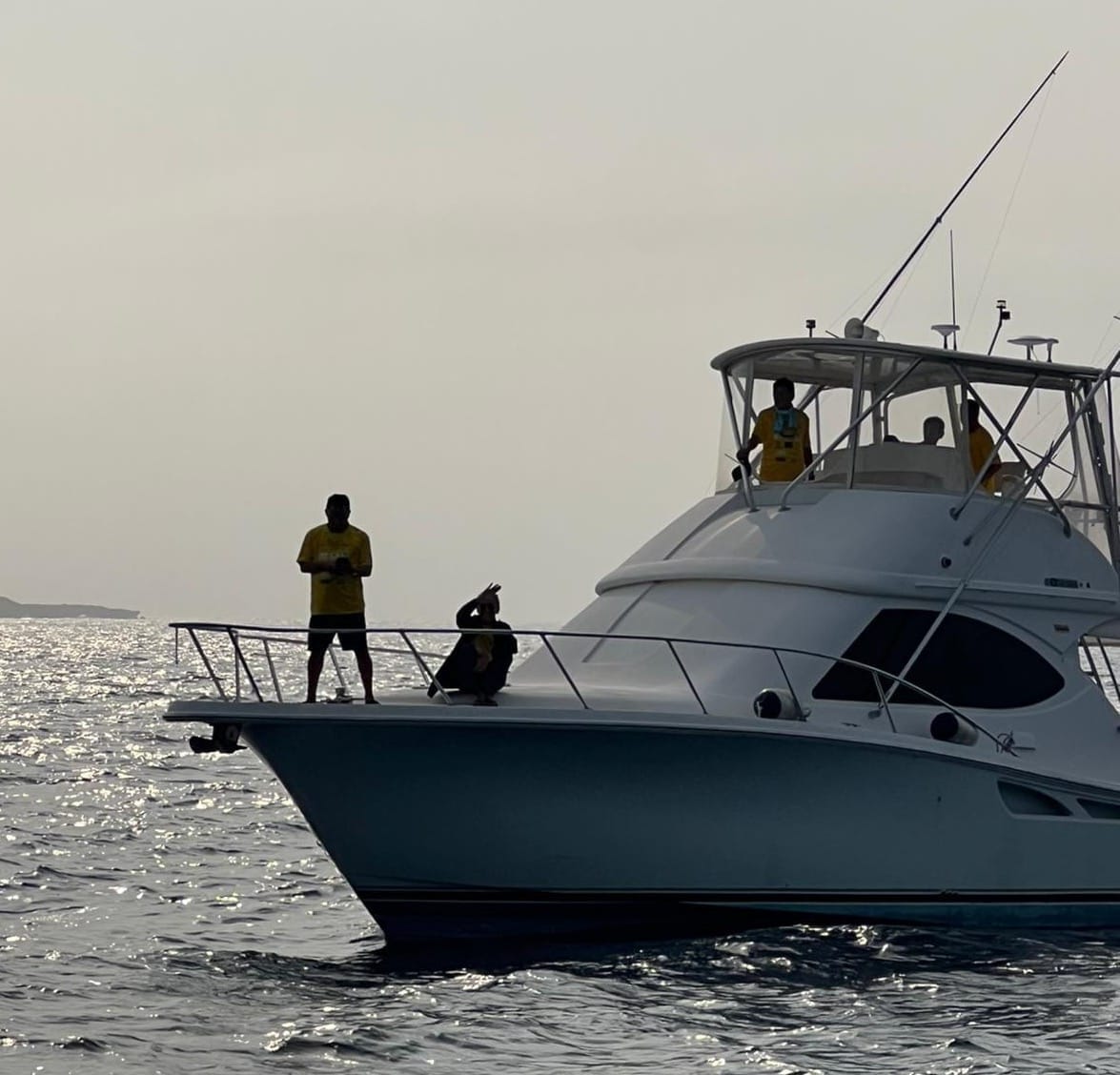
It was the welcome boat from our Okinawan hosts. As it drew near, I saw my friend Rita sitting on the foredeck, smiling and waving. Next to me, Zea from Guåhan waved frantically, shouting, “Mom! Mom!” My eyes welled up with tears.
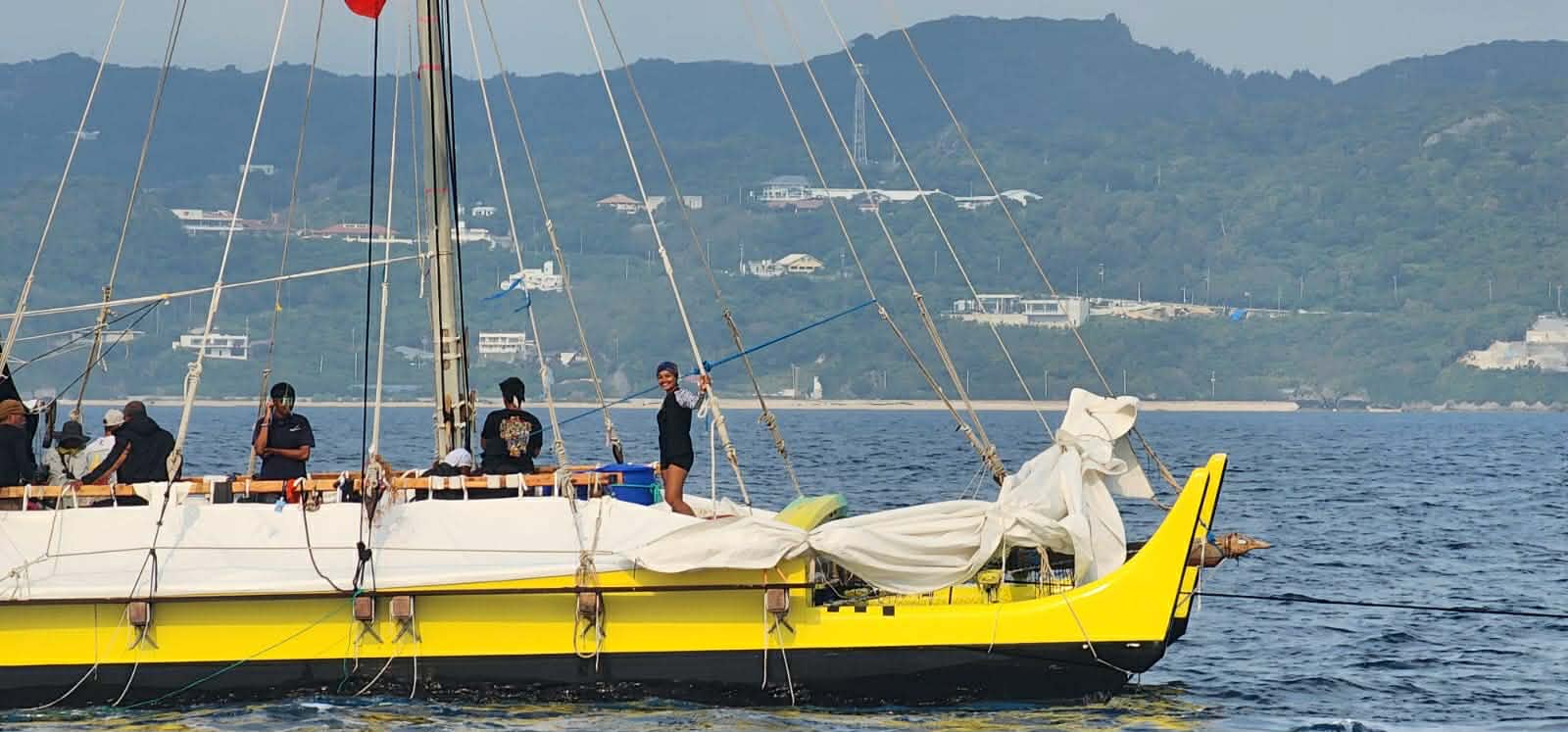
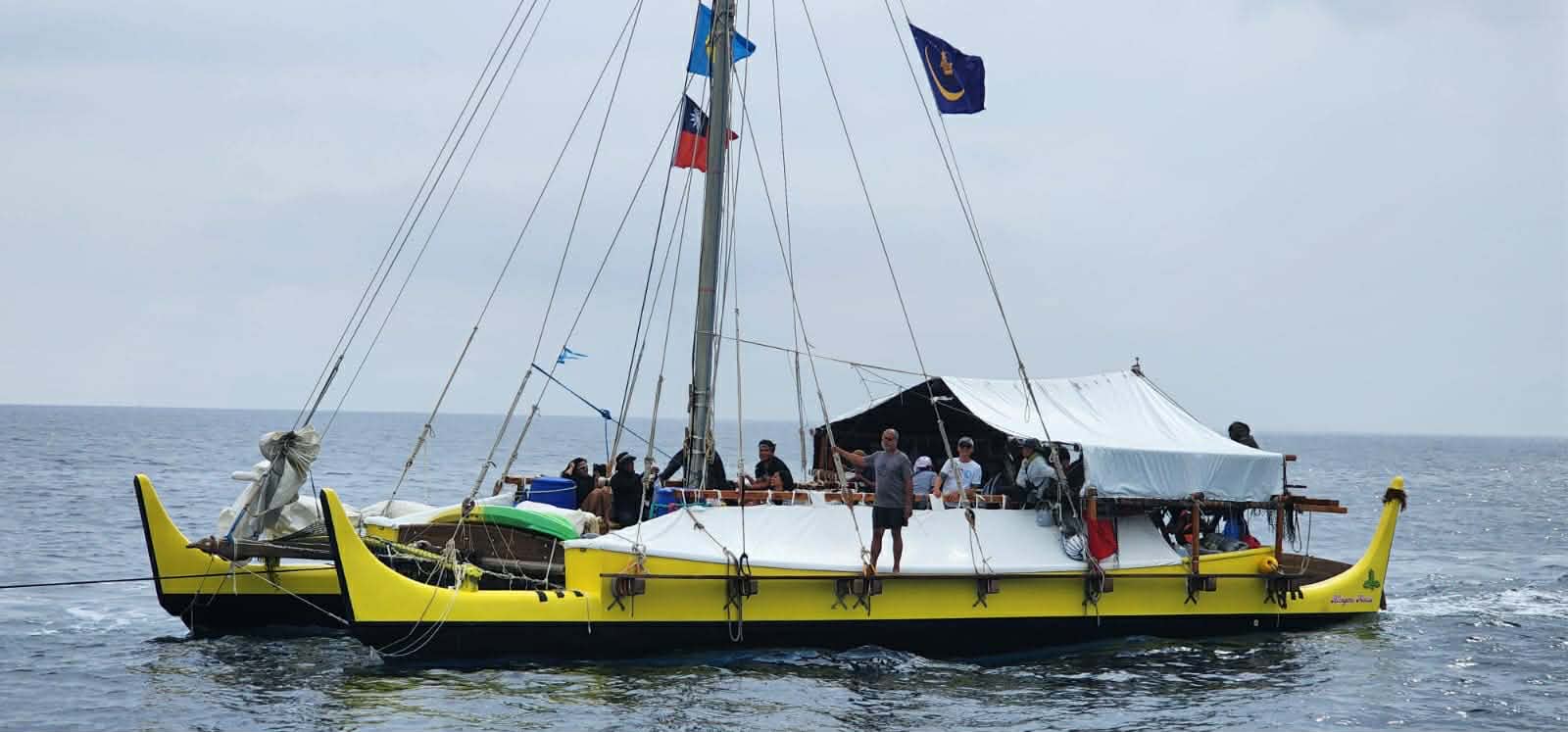
This is nothing like the clinical speed of an airplane. I am so glad I came to Okinawa for the first time this way: slowly, from the sea, beginning with the midnight mists and the surging swells of the open ocean, finally arriving in the bright, calm bay. Finding the way step-by-step involves much hardship, but it allowed me to see Okinawa from an angle no tourist ever could. I saw the “smile” of Okinawa approaching from the sea to welcome us. This slow journey gave my heart the time it needed to fully experience the weight of “arrival.”
Another thought surfaced: For the past three years, I have been sharing my experiences with the Wind Voyagers of Changbin (WVOC), where we have studied and trained together to raise a team of courageous, capable sailors. Now that I have gained firsthand experience in long-distance voyaging aboard Alingano Maisu, how can I best bring this home to them?
Translation post-edited by Yulun Huang (Yaya)